Burr, squareness and flatness: the three things to measure in a cut
The certificate says the material conforms. The press says otherwise. These are the three checks that separate a lot that runs from one that jams.
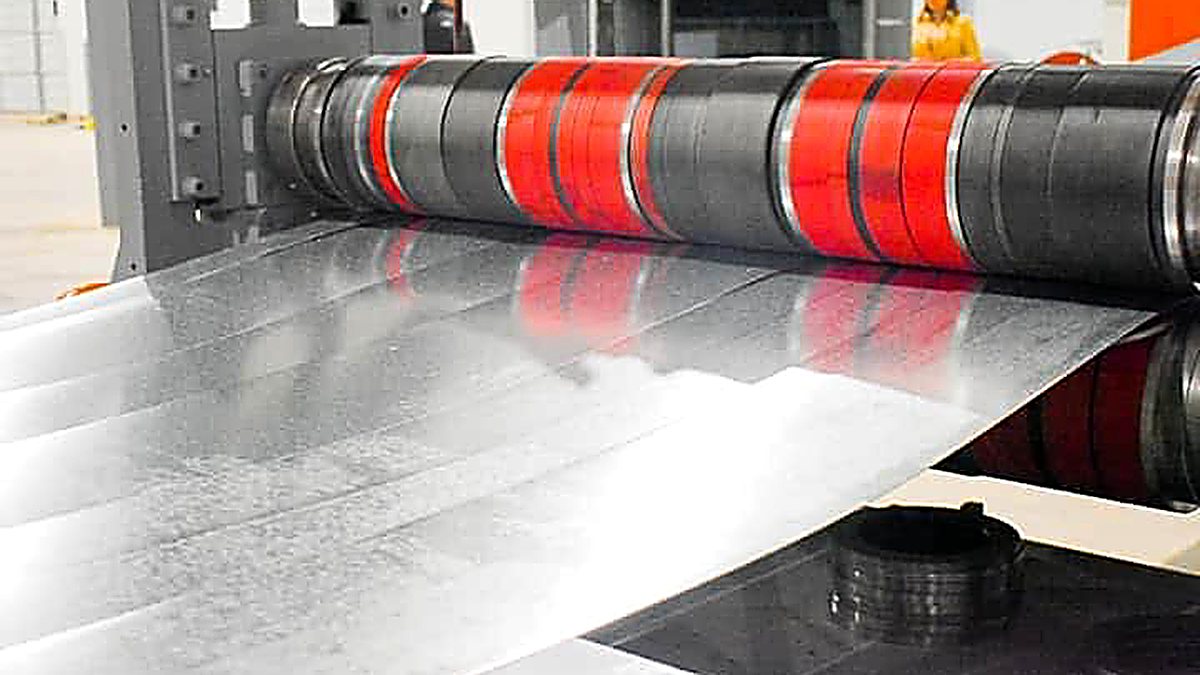
A lot of sheet can carry the right dimension on the label and still stop a production line. The reason is almost always something the label does not say: how the edge came out, whether the sheet is square, and whether it sits flat on the table.
All three are checked at the dock, before you sign the material in. No laboratory required.
1. Burr
Burr is the lip of material left on the edge when the cut was made with the wrong clearance or with a knife that has lost its edge. In the real world you find it with a gloved finger: if it catches, there is burr.
Why it matters more than it seems
- It is a direct cut hazard for anyone handling the material.
- In stamping, a burred edge wears punch and die more on one side than the other, and the tooling goes off center.
- In spot welding, burr lifts the sheet and leaves a gap between blanks: the nugget comes out with less area and less strength.
- In paint and coating, a sharp edge will not hold film thickness, and that is where corrosion starts.
How to measure it without specialized equipment
Cut a coupon from the edge and look at it under a shop loupe with a reticle, or measure it with a micrometer comparing thickness in the flat area against thickness at the edge. The difference is burr height. A common industry criterion is to limit burr to a percentage of thickness — on the order of 5 to 10 % — but the number that rules is the one you agree with your supplier and write on the purchase order, not the one everyone assumes.
If you have never specified a burr limit, do not negotiate it over the phone: put it in writing on the order and ask for it to be reported at delivery.
2. Squareness
An out-of-square sheet is a parallelogram disguised as a rectangle. It looks perfect until somebody stacks it or drops it into a fixture.
The check is high-school geometry and it works: measure both diagonals. In a perfect rectangle they are identical. The difference between them is the squareness error, and it accumulates in every later operation that uses an edge as a reference.
Where it hurts:
- In welding fixtures, the part will not sit against the stops and the operator forces it.
- In dies with pilots, the material enters rotated and the pilots work overtime.
- In visible panels, the joint opens on one side and closes on the other. That is the defect the end customer sees.
3. Flatness
This is the one that rejects the most lots and gets measured the least. A sheet can be perfectly square and still be bowed, edge-waved or center-buckled.
The table test
Lay the sheet on a flat surface and look for light underneath. With a straightedge and a set of feeler gauges you can measure the maximum gap. The typical defects have distinct names and distinct causes:
- Bow: the sheet lifts at the ends. Almost always coil memory the leveler did not finish removing.
- Edge wave: the edges ripple like wet paper. It comes from the coil edges having been rolled longer than the center.
- Center buckle: the reverse, with the center longer than the edges.
- Twist: the four corners are not on the same plane. This is the worst one for automated fixtures.
Each is corrected at a different point of the leveling line, so reporting which of the four your lot shows is not a technicality: it is what lets the process be adjusted instead of guessed at.
A receiving protocol that fits in ten minutes
For a new lot or a new supplier, this is enough:
- Take three sheets at random: one from the top of the bundle, one from the middle and one from the bottom.
- Measure the diagonals on all three and record the difference.
- Run a gloved finger along all four edges of each.
- Rest each sheet on a flat table and measure the maximum gap with a feeler gauge.
- Write the results on a simple sheet and file it with the material receipt.
That sheet is worth its weight in gold when, three months later, a forming defect shows up and somebody has to decide whether the problem is the material or the tooling.
What you can demand from your service center
A serious service center does not take offense at any of this:
- That knife clearance is set by gauge and material, not generically.
- That burr is checked during the run and not only at the start.
- That the bundle arrives banded, corner-protected and with heat identification visible.
- That if something drifted out of range, you are told before shipment and not after.
None of that makes the cut more expensive. What makes it expensive is finding out at the press.
Need a quote for a cut like this? Send us material, gauge and size.
Request a quote